“We did it”: How young workers pushed the EU to act
An alliance of trade unions, civil society organizations, and young activists has secured a crucial victory in the fight against unpaid traineeships. ETUC Confederal Secretary Tea Jarc explains how campaigners defied intense opposition to push the proposal forward, bringing Europe one step closer to ending the exploitation of young workers.
We did it. Against political blocking, closed-door negotiations, and attempts to quietly kill the issue, trade unions and young people across Europe forced EU leaders back to the table.
Last week, our collective pressure delivered a crucial breakthrough in the fight against unpaid traineeships.
At a moment when the proposed EU Traineeships Directive was at serious risk of being withdrawn, governments were finally forced to move. On Tuesday, 5 May, negotiations took a major step forward. The directive remains alive, discussions are moving again, and what seemed politically frozen only weeks ago has become a real negotiation process.
This victory belongs to every young worker who refused to stay silent. Every trade unionist who mobilized. Every activist who shared posts, signed letters, and pressured ministers.
This is proof that collective action works.
But this fight did not begin yesterday. This recent victory comes after a decade of fighting exploitation.
How far we’ve come
For almost 10 years, trade unions and youth organizations across Europe have been fighting to end one of the biggest injustices facing young people in the labor market: unpaid and underpaid traineeships or internships.
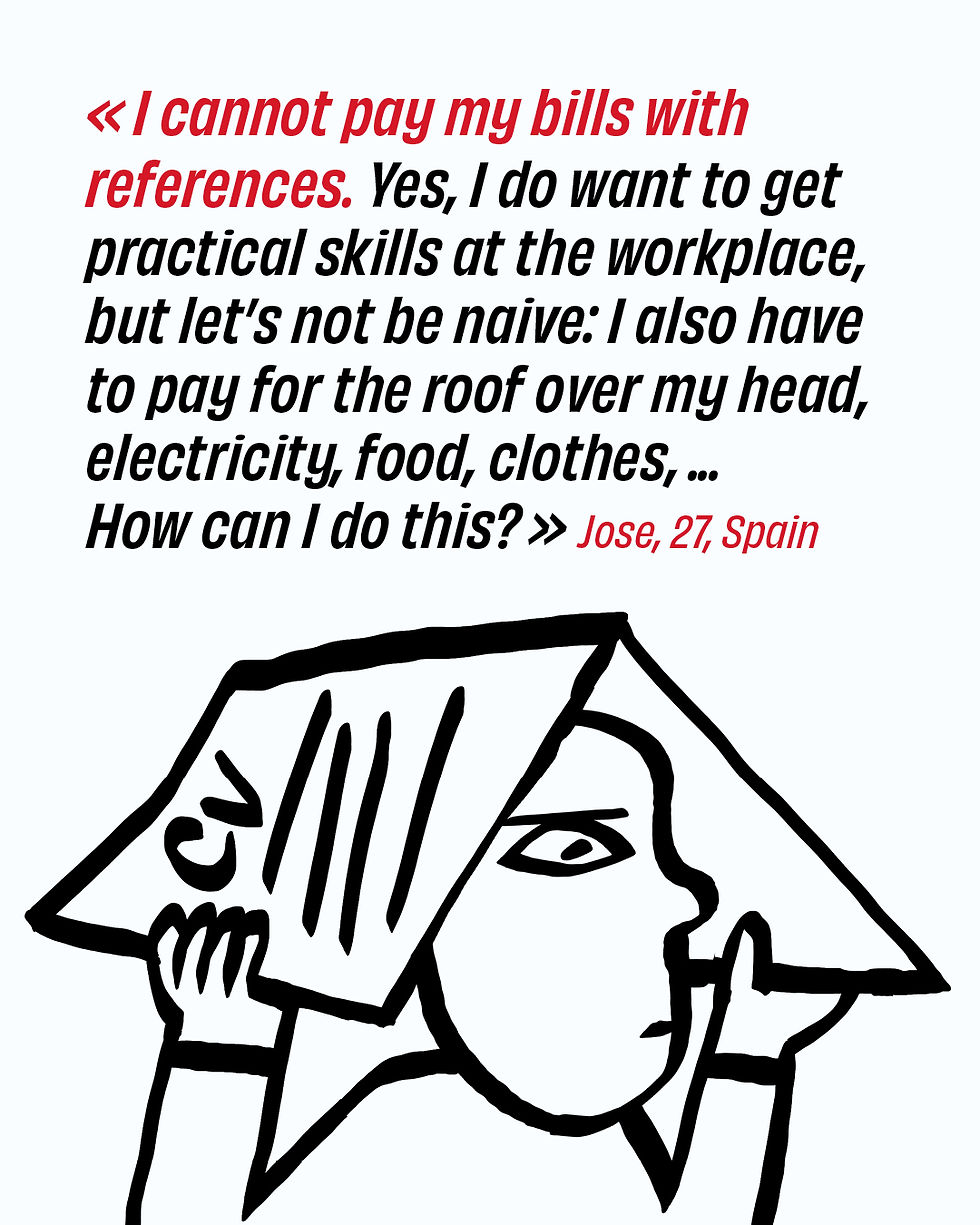
For too long, young people have been told to accept exploitation in exchange for “experience”. To work for free while employers profit from their labor. To survive endless internships while rents rise, wages stagnate, and the cost of living explodes.

Unpaid traineeships have become a system that rewards privilege and excludes working-class youth. If you cannot afford to work for free, you are locked out of opportunities.
In 2024, we finally managed to achieve an important breakthrough and convinced the European
Commission to present a proposal for a Quality Traineeships Directive. After years of pressure from trade unions and youth organizations, Europe finally acknowledged that exploitation disguised as “training” cannot continue.
Facing a backlash
For the first time, there was a real opportunity to create stronger protections for trainees and move towards banning unpaid traineeships across Europe. But after the announcement, progress stalled.
Employers’ organizations lobbied heavily against the directive, presenting it as too much of a burden to actually pay their workers. Negotiations slowed down. Discussions became blocked.
Member states, lacking any national rules on traineeships, wanted to keep their status quo. And behind closed doors, there were increasing signs that some governments and EU institutions wanted to quietly withdraw the directive altogether.
Instead of protecting young workers, they were preparing to bury one of the most important social initiatives for this generation.
We could not allow that to happen. So we escalated.
The fightback
Together with trade unions, youth organizations and activists across Europe, we launched a major campaign to defend the directive and demand ambition from governments.
Thousands of letters flooded the inboxes of labour ministers across Europe. We coordinated social media actions with one clear message: Work is work. It’s time to pay trainees.

We published an open letter to ministers, publicly called out governments blocking progress and demanded transparency about what was happening behind closed doors.
The pressure grew rapidly. Young people shared stories of exploitation and insecurity. Trade unions mobilized nationally and at European level. The political cost of blocking the directive became impossible to ignore.
And it worked. At the trilogue meeting on 5 May, negotiators from the EU institutions and member states agreed to move discussions forward through three concrete negotiation packages (a set compromise proposals and trade-offs negotiated between EU institutions and member states). The objective is to reach agreement on at least one full package by the next trilogue meeting on 18 June 2026, with the remaining elements to be taken forward by the incoming Irish Presidency of the Council of the EU.
Not a done deal
Politically, this is a major breakthrough. Only weeks ago, the directive was at risk of collapse. Today, negotiations are alive again.
This did not happen because governments suddenly changed their minds on their own. It happened because trade unions and young people organized, mobilized, and refused to stay silent. This is what collective power looks like.
We celebrate this victory because it matters. But we are not done.
Now comes the most important phase: ensuring the text of the directive is ambitious, meaningful and delivers real change for young people across Europe.
That means fighting for a real ban on unpaid traineeships. It means guaranteeing equal rights and protections for trainees. And it means recognizing that trainees are workers who deserve dignity, rights, and fair pay.
We won’t back down
This week proved something important: when young people and trade unions organize together, we can shift European politics. This was a small — but crucial — victory.
But this fight is also bigger than traineeships alone.
Across Europe, we are hearing more and more calls for “competitiveness”, “flexibility”, and “deregulation”. Employers and some political leaders are once again trying to convince us that workers’ rights are obstacles to economic growth. That social protections are “too expensive”. That young people should lower their expectations and accept insecurity as the new normal.
We reject that completely. Competitiveness cannot mean building an economy on exploitation. Deregulation cannot mean stripping away basic rights at work. And Europe cannot claim to defend social values while allowing an entire generation to work for free.
If the European project means anything to young people, it must mean dignity, fairness and social progress for all — not profits built on precarious labor and unpaid work. Because Europe’s future cannot be built on unpaid labor.
Images from ETUC
Blog post licensed under CC BY-NC-SA 4.0


Comments